

Important information - the value of investments and the income from them, can go down as well as up, so you may get back less than you invest.
Lee doesn’t describe himself as an investor - despite being a pretty savvy one.
Money was always there when he was growing up, but it was rarely talked about directly. His dad was a careful and methodical saver, rather than an investor. He was the sort of person who, back in the day, cut out the latest interest rate update and actively watched which bank was offering what.
As Lee puts it, “My father was a saver - and still is a saver - but a saver rather than an investor.”
So, the lessons Lee learned were less about growing wealth. It was more about security and living within your means, avoiding debt and doing the sensible thing. “It was important to save, but there wasn’t really any investing going on as such,” he says.
These kinds of early money influences have a way of embedding themselves, even when you don’t realise it.
Lee went on to study economics before training as an actuary. He was comfortable with numbers. But investing still felt like something slightly separate - something other people did with more confidence, or more appetite for risk.
So, when he did take his first step away from cash, he knew it was a cautious one. ”I put some money into Premium Bonds at first,” he explains, “because I’d read that they were tax-free. They felt familiar and safe.”
Lee’s investing eureka moment
The real turning point came years later, and not in a boardroom or a market wobble, but in a classroom.
By then, Lee had retrained as a maths teacher. Day after day, he was teaching teenagers about compound interest - how percentages build on percentages, how growth can accelerate over time and turn something smaller into something bigger if you give it long enough.
That was when it clicked.
“I realised everything I was doing when I was investing could be explained by the same formula I was teaching 14-year-olds,” Lee says.
At some point, it dawned on him that this was the same thinking he used when he looked at his own money.
That insight stripped investing back to its bones. Just time, growth and patience. It also reframed risk. “It’s not too difficult an idea,” he adds. “I teach it every day to schoolchildren.”
If schoolchildren could understand exponential growth, perhaps investing wasn’t a dark art after all. Perhaps it was simply a long game that rewarded those who stayed in it.
Time… and why it’s so important
Lee has been investing for around 30 years now, and he’s refreshingly open about the fact that his investing journey hasn’t been ‘perfect’.
He invested in funds with higher fees than he might choose today. He’s had a natural bias towards familiar markets, such as the UK. These are decisions that, with hindsight, he might tweak. But he doesn’t overly dwell on any of it. And the reason for that is time.
“All those little mistakes don’t matter that much,” he explains. “The length of time just dwarfs them.”
Over the decades, Lee came to realise that the effect of staying invested mattered far more than any single choice along the way. Short-term ups and downs evened out. Early missteps faded into the background.
In his experience, the most lasting and effective strategy had been patience and staying invested. It’s sage counsel.
For people who feel intimidated by investing, those who worry they’ve missed the boat, or don’t know enough, or fear getting it wrong… this is often the quiet reassurance you might find helpful. You don’t have to be an ‘expert’ investor to benefit from investing. “If you commit to the journey and stay with it,” Lee says, “it smooths it all out.”
Inflation - the risk people don’t always see
If time is the hero of Lee’s investing story, then inflation is the villain. And that’s partly because it’s so easy to miss.
Cash feels safe. It doesn’t fluctuate. The number doesn’t go down. But, over time, Lee’s come to realise that inflation quietly eats away at what his money can actually buy. Standing still isn’t neutral.
“Inflation quietly eats away at what your money can actually buy,” he explains.
Understanding how money grows also means understanding how it shrinks. That awareness has shaped how Lee thinks about saving, spending and investing.
Getting closer to retirement
Lee now finds himself at a point in life that many people approach with mixed emotions. His wife is considering retirement. He’s thinking about it too - not necessarily stopping altogether but, perhaps, changing gear in the not-too-distant future. He wants to find something he can dip in and out of. Something that holds his attention, gives him purpose, but also gives him freedom to enjoy life to the full.
In many ways, that’s been investing’s gift to him.
“Choice is the real value to investing” he says.
Choices to slow down. To try something new. To step away without feeling trapped. Investing, for Lee, was never about chasing wealth for its own sake. It was about avoiding the feeling of being boxed in later on in life.
And so… he wrote a book about it
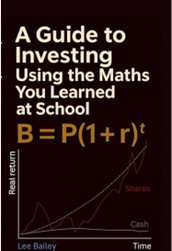
All of Lee’s investment journey led somewhere just beyond growing a portfolio. He also built around the simple maths of compound interest, Lee’s self-published book isn’t a guide to beating the market or finding clever shortcuts. Instead, it’s a plain-spoken explanation of how money grows over time, why inflation matters, and why you don’t need to be perfect for investing to work.
It’s grounded in his own experience, including the mistakes. And it’s been written with people like his parents - and his students - in mind to make the fundamentals accessible to everyone.
About Lee

Lee is a long-standing Fidelity Wealth Management client and a maths teacher. He volunteered to share his story to help demystify investing for others and show that long-term investing doesn’t require brilliance - just understanding, patience and time.
Important information - investors should note that the views expressed may no longer be current and may have already been acted upon. This information is not a personal recommendation for any particular investment. If you are unsure about the suitability of an investment you should speak to one of Fidelity’s advisers or an authorised financial adviser of your choice.
Share this article

Latest articles
This IHT mistake could cost you £78,000
How taper relief can affect the inheritance tax seven-year rule

Marianna Hunt
Fidelity International
02 April 2026
Two investment decisions you shouldn’t delay
Make the most of your allowances before tax year end

Tom Stevenson
Fidelity International
02 April 2026
IHT problem? Try combining these perks
The role Junior ISAs can play in inheritance tax planning

Jemma Slingo
Fidelity International
01 April 2026
